Welcome to UnplugLTDTools
At UnplugLTDTools, we are dedicated to raising awareness about the deceptive trade practices of LTD. Our founder, TJ Musumhi, a former member of LTD, was recruited in 2016 by Amway Platinums Daniel & Thao Goebel. LTD is a training and motivational organization affiliated with Amway, and we are determined to shed light on the false income and time commitment claims presented at LTD meetings. Our mission is to free the minds of those who have been victims of LTD's deceptive trade practices.
Share Your Story - (LTD Solicitation Pitch)
Recordings of The Pitch-(Share Your Story) Made to Prospects 👇
Note: Amway Distributers are taught to make false lifestyle claims about their recruiters/mentors in order to lure prospects. Be aware, the majority of lifestyle claims made by Amway Distributers is FAKE. Making false lifestyle claims about an upline/recruiter is ILLEGAL.
When someone is being recruited into a business opportunity, the law requires the information they are given to be truthful and accurate. That includes any claims about a person's lifestyle, income success, cars, houses, or achievements.
If a recruiter says someone is making a certain amount of money, living a certain lifestyle, or achieving a certain level of success when it's not true, that becomes a deceptive earnings claim.
Under the FTC ACT and State Consumer-Protection Laws, it is illegal to use false stories or exaggerated lifestyles to influence someone's decision to join. You cannot legally convince someone to sign up by presenting fake succes, inflated income, or a lifestyle the person doesn't actually have.
Simply put:
You can't lie or exaggerate about someone's success to get a prospect excited.
If the lifestyle isn't real, the claim is illegal.
Recording About How to Mislead & Exaggerate Lifestyle Claims to Prospects👇
Drop The Message - (How LTD Adds Prospects to their Interview Process)
Recordings of Dropping The Message 👇
LTD Respones to Questions From Prospects
👆This illegally violates the FTC ACT. Legally, if someone were to ask Amway Distributers if they are innvolved with Amway, they must admit they are involved with Amway. That doesn't mean Amway Distributers are automatically required to reveal their "trade secrets" on how they build their Amway Distributership. It means they must reveal the opportunity they are involved with is the Amway opportunity. Not doing so is misrepresentation, and it violates The FTC Act.
If someone asks:
"Is this Amway?"
..and the recruiter says:
- "No",
- "Not really,"
- "It's something different,"
- "Just trust the process,"
- "Do you mean selling or recruiting? Than no,"
- "I don't know what that is,"
- or avoids the question entirely
That is misrepresentation; knowingly giving false or misleading answers.
Misrepresentation is explicitly illegal under:
- The FTC Act
- Every state Consumer-Protection Statute
- Business Opportunity Rules
There is no legal wiggle room on this.
Recordings About How to Lie to Prospects 👇
Amway Reps won't reveal that the opportunity is Amway until the Third Meeting within The Vetting Process-(explained in The Vetting Process document below). Hiding the fact that the opportunity is Amway violates State Consumer Fraud Laws & Deceptive Trade Practice Laws. This is because the law is very clear. You can't lure someone in with a false business opportunity, then later switch it to Amway. It also violates Amway Rule #4.1-(Business Reference Guide) because waiting to reveal that it's Amway several meetings later means Amway Reps are wasting prospects time and effort under false pretenses. By legal definition, hiding the fact that the opportunity is Amway is concealment of a material fact. This concealment prevents prospects from making an educated and informed business decision. By law, Amway Reps are LEGALLY REQUIRED to disclose to prospects that the business opportunity they are involved with is the Amway opportunity. Hiding the fact that it's Amway-(even temporarily) violates State Consumer laws, and Rule #4.1 in the Amway Business Refrence Guide-(Amway Distributer Contract). The Amway Business Reference Guide is listed below on this page.
🚫 Hiding that the opportunity is Amway-(even temporarily) is ILLEGAL. That is also a violation of FTC Act Section 5, which prohibits hiding a material fact through deception or omission.
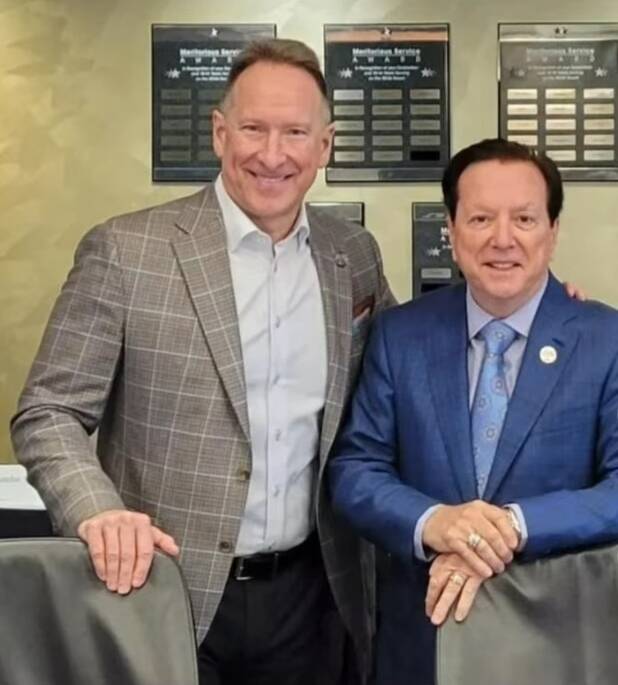
Callbacks - (The Two Phonecalls After The Amway Distributer Gets a Prospects Phone Number)
Recording of Amway Diamond Kevin Schwers Soliciting People 👇
LTD Interview and Vetting-(Solicitation) Process
During the "interview process," the business name, AMWAY; is intentionally hidden until the third meeting-(within the 7 to 9 meeting interview process). This is ILLEGAL because the law requires all material facts to be disclosed upfront, not delayed until a prospect is emotionally invested. Failing to reveal the true business at the start is considered Deception By Omission, and denying it when asked is misrepresentation. People have the right to know exactly what business they are being recruited into from the beginning.
Under the FTC ACT Section 5, it is illegal to hide material facts. Under State Consumer-Protection Laws, it is illegal to mislead prospects. If someone asks, "is this Amway?" and they deny it? That becomes misrepresentation; which is also illegal.
Prospects deserve the truth on day one, not after the LTD system has gotten into their heads.

🚨 DECEPTIVE TRADE PRACTICE: BAIT-AND-SWITCH THROUGH LTD'S “VETTING PROCESS”
A deceptive trade practice occurs when a business uses a representation, omission, concealment, or sales practice that creates a materially misleading impression for consumers. Bait-and-switch is one method of a deceptive trade practice: the consumer/prospect is drawn into a transaction or solicitation through one representation or “door opener,” while the actual product, company, or commercial objective is withheld and revealed later.
That is exactly how LTD's self-created “interview” and “vetting” process operates.
THE BAIT: AN UNNAMED “OPPORTUNITY”
The prospect is not initially approached with a straightforward statement such as:
“I am an Amway Independent Business Owner and I want to recruit you to become an Amway IBO.”
Instead, the prospect is approached about an unnamed opportunity.
The solicitation is framed around concepts such as mentorship, entrepreneurship, business ownership, passive income, financial freedom, building an asset, replacing job income, or creating an additional stream of income.
That distinction matters.
The prospect believes he or she is evaluating some undefined entrepreneurial or financial opportunity while the recruiter already knows the actual underlying business being presented is Amway.
The identity and nature of the business are therefore not incidental details. They are material information deliberately withheld during the initial solicitation.
THE “VETTING PROCESS” DEEPENS THE BAIT
LTD then turns the solicitation into what it calls an “interview” or “vetting process.”
Instead of immediately identifying Amway and allowing the prospect to independently evaluate the company, its compensation plan, costs, products, income disclosure, and reputation, the prospect is moved through multiple meetings and assignments first.
The prospect spends time meeting with the recruiters, answering questions, reading recommended books, listening to audios, completing assignments, and attempting to prove that he or she is “qualified” for an opportunity whose actual identity has still been withheld.
That process reverses the normal relationship between buyer and seller.
The prospect is being taught to believe that LTD is deciding whether the prospect deserves access to the opportunity, when LTD distributors are actually conducting an Amway recruitment and solicitation process.
THE SWITCH: “THE OPPORTUNITY” IS AMWAY
Only later does the unnamed opportunity become Amway.
That is the switch.
By the time Amway is disclosed, the prospect has already invested time, attention, trust, emotional energy, and repeated interactions into the recruiters and their process.
The eventual disclosure of Amway does not erase the deceptive first contact.
The FTC has specifically recognized that misrepresenting the purpose of an initial contact can constitute deception and that inaccurate or incomplete information during marketing and sales practices can be deceptive. FTC guidance also recognizes that when the first contact itself is deceptive, subsequently revealing the truth does not necessarily cure the original deception.
IT ALSO CONFLICTS WITH AMWAY'S OWN OPPORTUNITY-MESSAGING RULES
This becomes even more significant because Amway's own rules and guidance restrict the language IBOs are permitted to use when presenting the Amway business opportunity.
These restrictions are specifically addressed in Amway's own compliance materials, including the Amway Guiding Principles document and the Amway QAS content Standards.
The Amway Guiding Principles document specifically restricts financial-lifestyle representations such as “financial freedom” and “financial independence.” These are not simply words that critics of Amway have identified as problematic. They are representations addressed by Amway's own internal rules and guidance governing how IBOs are permitted to present the opportunity.
The relevant portions of the Amway Guiding Principles document are provided below on this page.
The Amway QAS Content Standards likewise contains rules governing income and opportunity representations. Representations involving concepts such as “passive income,” “financial freedom,” “financial independence,” “ongoing income,” “replace your job,” “replace your job income,” and similar claims suggesting that the Amway opportunity produces continuing income without ongoing effort or serves as a replacement for employment income are restricted or prohibited under Amway's own rules and compliance standards.
The relevant portions of the Amway QAS Content Standards Guide are also provided below on this page.
This distinction is critical because these are the exact types of representations that are used to make the unnamed opportunity attractive before the prospect fully understands what he or she is actually being recruited into.
Amway's own opportunity-messaging guidance also tells IBOs that opportunity messaging must be truthful, accurate, realistic, and not misleading.
Amway's guidance specifically instructs IBOs to avoid representations involving:
“wealth”
“financial freedom”
and
“replacement income.”
Instead, Amway directs IBOs toward realistic supplemental-income goals and requires appropriate disclosures and context surrounding income representations.
So when an LTD distributor/rep uses terms such as “financial freedom,” “financial independence,” “passive income,” “ongoing income,” “replace your job,” “replace your job income,” or similar financial-lifestyle representations to generate interest in an unnamed opportunity, the problem exists at two separate levels:
The prospect is not being told what the opportunity actually is, while simultaneously being sold on financial concepts that Amway's own Guiding Principles, Business Reference Guide, and opportunity-messaging standards specifically restrict or prohibit.
SECTION 5 OF THE FTC ACT
Section 5 of the Federal Trade Commission Act prohibits unfair or deceptive acts or practices.
The FTC's deception standard focuses on three fundamental questions:
Was there a representation, omission, or practice?
Was it likely to mislead a reasonable consumer?
Was the information material to the consumer's decision?
The FTC has specifically identified bait-and-switch techniques among practices it has found deceptive and has separately recognized deception where a salesperson misrepresented the purpose of the initial contact.
The identity of the company behind a business opportunity is plainly significant to a prospect deciding whether to continue participating in that recruitment process.
Withholding “Amway” while selling the prospect on an unnamed mentorship, entrepreneurship, passive-income, or financial-freedom opportunity creates an entirely different initial impression of what the prospect is being invited into; even if the omission is temporary.
STATE CONSUMER-PROTECTION LAWS
State consumer-protection statutes independently prohibit deceptive commercial conduct.
These laws commonly address misrepresentation, concealment, suppression, omission of material facts, false promises, and other deceptive practices.
For example, Iowa's consumer-fraud statute expressly addresses deception, fraud, false pretenses, false promises, misrepresentation, concealment, suppression, and omission of material facts when the statutory requirements are satisfied.
The terminology LTD attaches to its process does not determine whether the conduct is deceptive.
Calling recruitment an “interview.”
Calling solicitation a “vetting process.”
Calling Amway an “opportunity.”
Calling recruiters “mentors.”
And withholding the actual company name until later does not transform the underlying commercial activity into something else.
It is still solicitation for an Amway business opportunity.
THE DECEPTION IS THE PROCESS ITSELF
The problem is therefore much larger than simply saying, “They didn't mention Amway immediately.”
The entire sequence matters:
An unnamed opportunity is presented.
Financial freedom, financial independence, passive income, mentorship, entrepreneurship, or similar concepts generate interest.
The identity of Amway is withheld.
The prospect enters a multi-step “vetting” or “interview” process.
The prospect invests time and develops trust before knowing what is actually being sold.
Only afterward is Amway revealed as the underlying business opportunity.
That sequence is the deception.
LTD's “vetting process” functions as a deceptive door opener: attract the prospect with an unnamed financial and entrepreneurial opportunity, withhold the material identity of the business during the initial solicitation, build commitment through a manufactured selection process, and disclose Amway only after the prospect is already invested.
Temporarily hiding that the opportunity is Amway is an ILLEGAL deceptive practice when withholding that material fact creates a misleading impression during solicitation; disclosing Amway later does not erase the initail ILLEGAL deception under federal and applicable state consumer-protection law.
That is a bait-and-switch form of deceptive solicitation; the exact category of misleading first-contact, material-omission, and business-opportunity conduct addressed by Section 5 of the FTC Act and state consumer-protection laws.
Amway Guiding Principles Document 👇
Amway QAS Content Standards 👇
Some interesting clauses from QAS (but not all) are:
- B.2.b: Some words and phrases are always prohibited, including but not limited to: “quit your job,” “be set for life,” “make more money than you ever have imagined or thought possible,” “unlimited income,” “full-time income,” “residual income,” “career-level income,” “financial freedom,” “financial independence,” and “passive income,” or any substantially similar statements or representations. APs and IBOs are also prohibited from representing that income is guaranteed or assured.
- B.6: Disclosures are required when making any express or implied earnings claim to any audience and when promoting the Plan or the Amway business to a Prospect for the first time
- B.6.b: The following disclosure must be used whenever an earnings claim is made – with the year and average amount being filled in based on the current Income Disclosure Statement.
-- US: For the calendar year [year], the average income from Amway for all U.S. registered IBOs at the Founders Platinum level and below was [$___] before expenses.
Amway Business Reference Guide 👇

Books Given to Prospects in The Vetting Process
Chopwood Carry Water written by Joshua Medcalf
Pound The Stone written by Joshua Medcalf
The Go Giver written by Bob Burg & John David Mann
How to Think Like a Millionaire written by Mark Fisher & Marc Allen
Pro-Sumer Power written by Bill Quain
Pro-Sumer Power II written by Bill Quain
The Go Getter written by Peter B. Lyne
Business of the 21st Century written by Robert Kiyosaki
Rich Dad, Poor Dad written by Robert Kiyosaki
The Compound Effect written by Darren Hardy
Extra Materials Given to Prospects in The Vetting Process
(Password Protected) Website: A website link and a website login password to a website-(password protected) is given to prospects after Meet & Greet 1.
Audio: Business Systems by Robert Kiyosaki
Audio: Business of The 21st Century by Greg Duncan-(Crown from WWDB Tool System)
Audio: Protect The Goose by an Amway Distributer in LTD
Audio: Planitude by Trevor Baker-(Double Diamond from WWDB Tool System) P.S. this audio is a bootleg recording because it's illegally stolen from the WWDB System.

Places Amway Distributers Typically Solicite Prospects
Walmart
Target
Hyvee
Whole Foods
Costco
Sam's Club
Ross
Kwikstar Gas Stations
QT Gas stations
Caseys Gas Stations
Barnes & Nobles
Best Buy
Shopping Malls
Gyms
TJ MAXX
JCPENNY
Kohls
Recreational Parks
Dick Sporting Goods
Panera Bread
Starbucks
Scooters
Social Media
Join the Movement
If you have been affected by the deceptive trade practices of LTD, or if you want to support our cause, we invite you to join our community. Together, we can work towards bringing about positive change and holding those responsible for their actions.
Take a Stand Against Deception
Join us in our mission to uncover the truth and bring about positive change. Together, we can make a difference.